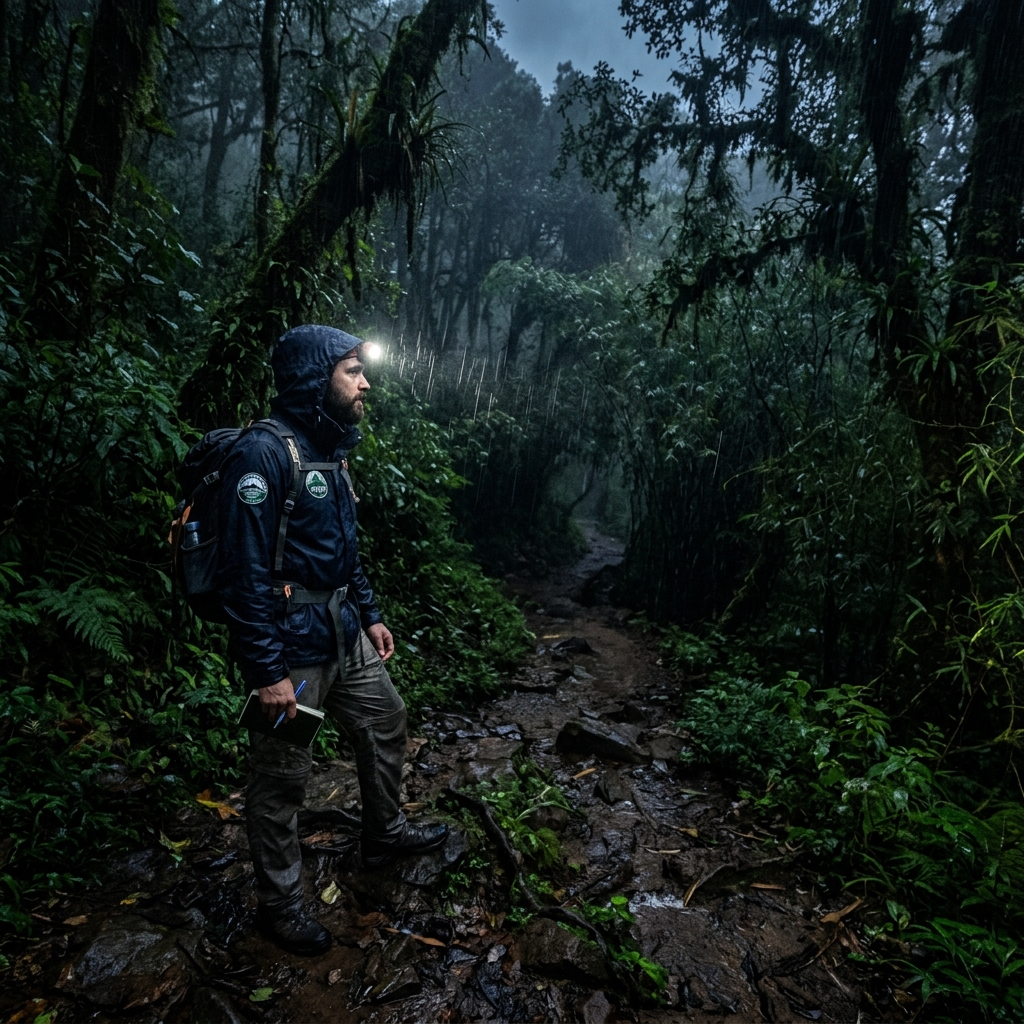
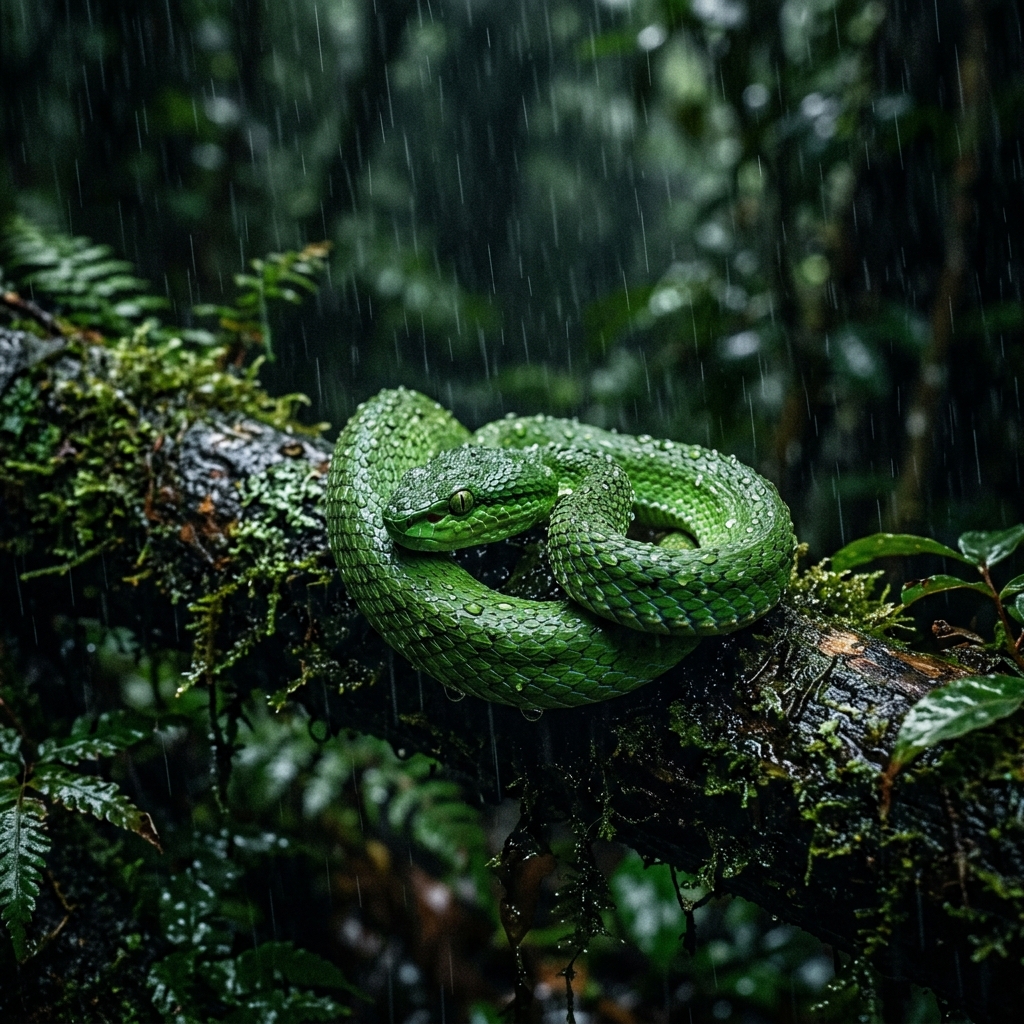
A Malabar pit viper coiled on a moss-slick branch doesn't move. You can stand two feet away in the pouring rain, your headlamp cutting through the heavy monsoon fog, and miss it entirely. It took me years of walking the Western Ghats at night to stop looking for movement and start looking for patterns - a sudden break in the green, a triangular shadow resting against wet bark, a texture that doesn't quite match the leaf litter. When you finally see it, perfectly still, rain dripping from its keeled scales, the entire forest shifts into focus.
This is what happens in Amboli during the peak of the Indian monsoon. The landscape is intensely alive, but it demands that you slow down and learn exactly how to look. We don't come here to rush in jeeps, scanning the horizon for stripes or spots. We walk, we wait, and we let the micro-wilderness reveal itself in the dark. The smell of wet laterite soil fills the air, and the sheer volume of amphibian calls vibrates in your chest.
Table of Contents
Why Amboli, Why Now
For eleven months of the year, Amboli is a quiet, unassuming hill station in Maharashtra's Sindhudurg district. Then the southwest monsoon hits, dropping some of the highest rainfall totals in the entire Indian subcontinent. Within weeks, the dry laterite plateaus and dense semi-evergreen canopy transform into a frenzied breeding ground for species found nowhere else on earth.
- Aly Rashid, Expedition Leader
The timing of our August 20–23 window is highly deliberate. If you arrive too early in July, the rains are often too torrential to allow safe macro photography, and the trails can be impassable. By late August, the initial frenzy settles into a reliable rhythm. The Amboli bush frogs are in full chorus, defending their territories. The mating behavior of endemic reptiles is at its most visible.
This is a fleeting biological window. By late September, the water recedes, the calls quieten, the temporary pools dry up, and the forest returns to sleep.
What You'll See in the Monsoon Canopy
When people ask what they will see in Amboli, they often expect a list of mammals. I tell them to lower their gaze. The apex predators here weigh less than a hundred grams. Amboli is a kingdom of amphibians, reptiles, and insects.
01 The Malabar Pit Viper
Craspedocephalus malabaricus - the species everyone wants to find. They are highly polymorphic, meaning you might see a bright green morph resting on one branch and a deep brown, yellow, or heavily patterned one just a few metres away. They are ambush predators, equipped with heat-sensing pits between their eyes and nostrils to detect prey in the dark. Venomous but deeply calm and unaggressive when undisturbed. With proper protocol, you can safely observe and photograph them at incredibly close range.
02 The Amboli Bush Frog
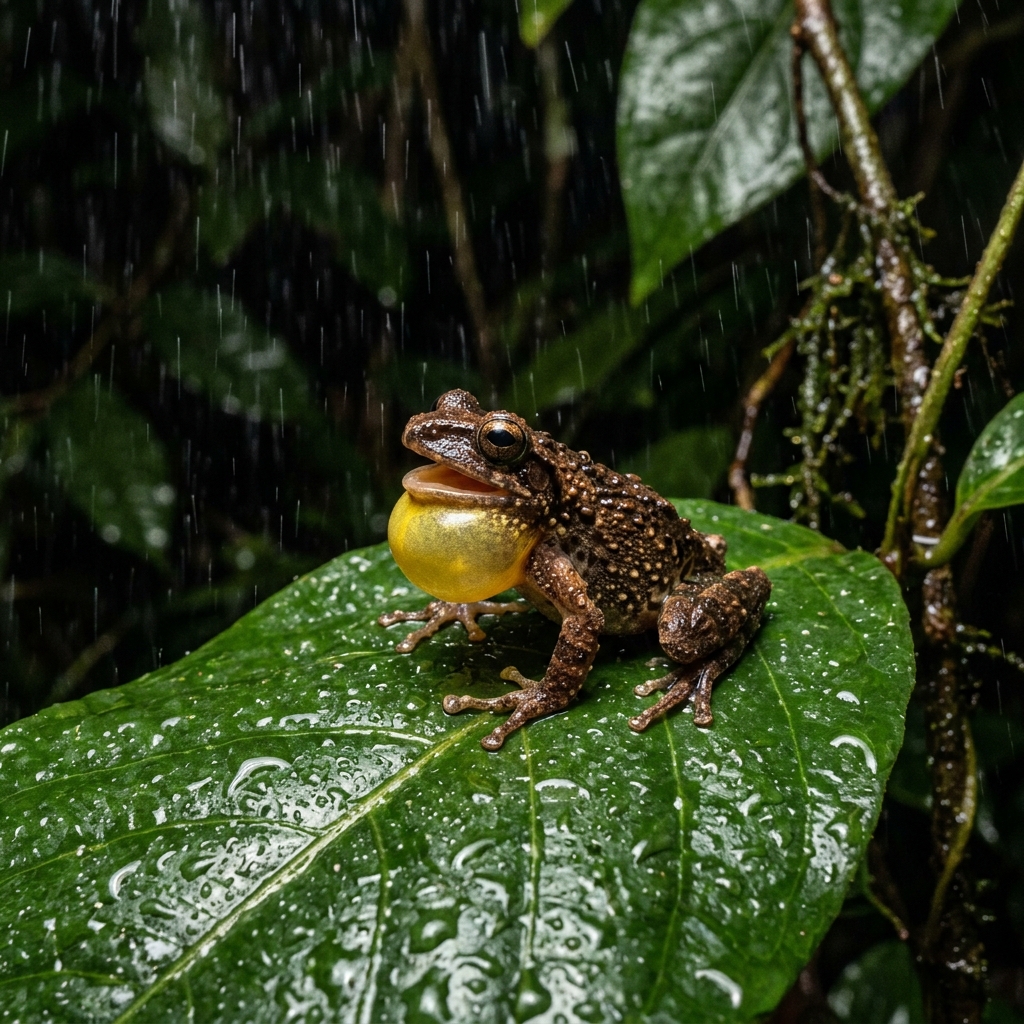
Before you see an Pseudophilautus amboli, you hear it. The males inflate their vocal sacs to call for mates, creating a wall of sound that somehow competes with the crashing rain. They are tiny - often no bigger than a thumbnail - and perfectly camouflaged against wet bark. Finding one mid-call in the beam of a torch is a lesson in micro-tracking.
03 The Malabar Gliding Frog
Rhacophorus malabaricus - an evolutionary marvel. These bright green amphibians use extensive webbing between their toes to glide from the high canopy down to water bodies to mate. Watching one drop through the humid air is strange and brilliant. They build complex foam nests overhanging small puddles; when the tadpoles hatch, they drop directly into the water below.
The full species list of what we typically encounter on this expedition:
- Malabar pit viper (Craspedocephalus malabaricus)
- Amboli bush frog (Pseudophilautus amboli)
- Malabar gliding frog (Rhacophorus malabaricus)
- Green vine snake (Ahaetulla nasuta)
- Ceylon frogmouth (roosting, diurnal)
- Wrinkled frog (Nyctibatrachus humayuni)
- Giant wood spider (Nephila pilipes)
- Shieldtail snakes (multiple species)
- Caecilians (legless amphibians)
- Bioluminescent fungi (conditions permitting)
The Expedition Experience
An expedition is not a holiday. We are here to work the forest.
01 The Daytime Routine
The mornings are generally slow. Heavy mist usually rolls in overnight, dropping visibility on the ghats to a few metres. We start with strong local coffee and a detailed briefing on what we missed the night before and what the goals are for the day. By mid-morning, when the light pushes through the thick canopy and the rain occasionally breaks, we head out on foot.
Daytime tracking is about reading the aftermath of the night. We look for fresh foam nests attached to leaves. We check the laterite rock crevices for sleeping geckos and skinks. This is also when we do the technical photography work - helping guests with macro setups, lighting, and composition in the chaotic, cluttered green background of the rainforest.
02 The Night Walks
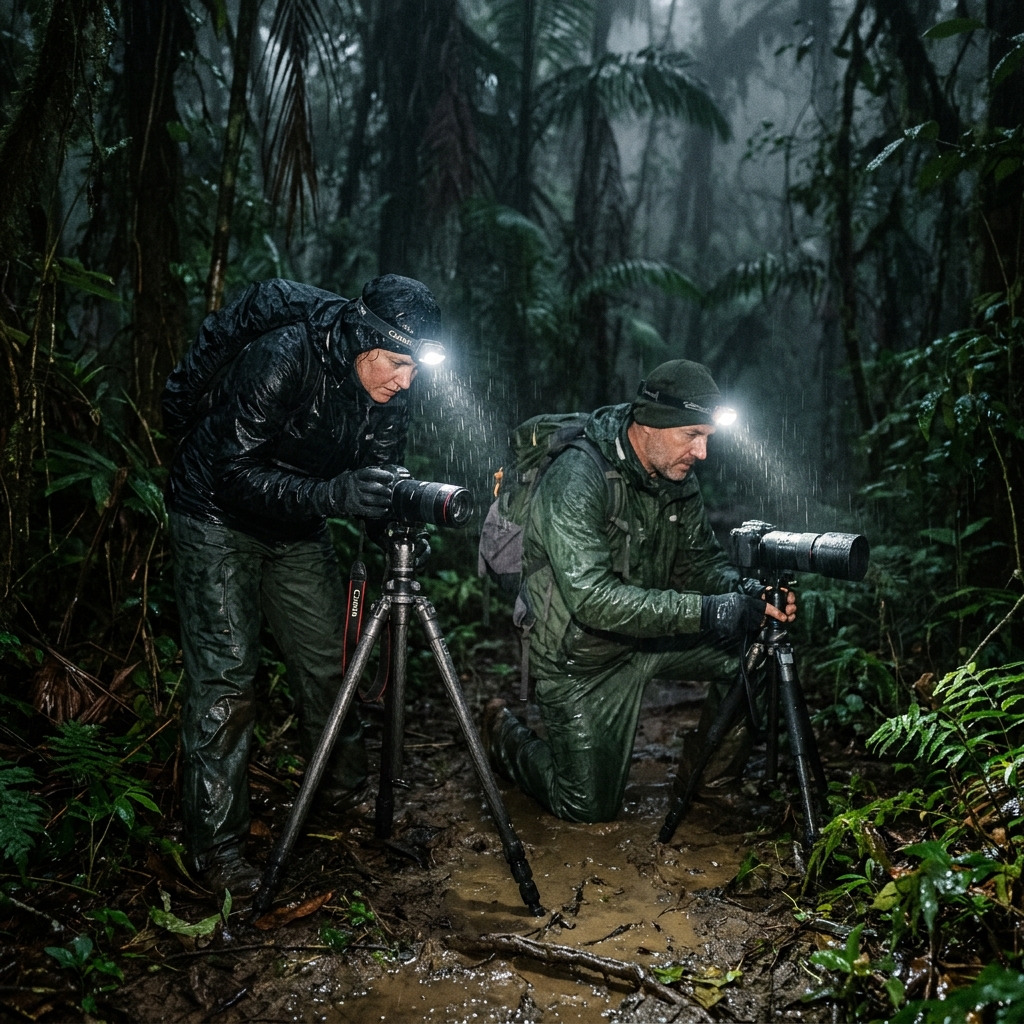
By 7:00 PM, the rain usually intensifies. We gear up in full waterproofs, strap on high-lumen headlamps, and step off the tarmac onto the forest trails. The noise hits you immediately. A monsoon forest at night is deafening.
We walk in single file, moving perhaps fifty metres in an hour. I am not just pointing things out; I am teaching you the search image. I will show you how to scan a branch not for a snake, but for the break in the texture of the moss. I will teach you how to follow a bush frog's call by triangulating the sound with your ears before you ever switch on your torch.
Who This Expedition Is For
01 The Serious Wildlife Enthusiast
You have done the tiger reserves. You know the central Indian forests well, and you have checked off the big mammals. Now, you want to understand a completely different ecosystem. You care about endemism. You want conversations about ecology, evolutionary biology, and habitat conservation, not just a checklist of sightings.
02 The Indian Wildlife Photographer
Monsoon macro photography is technically punishing. Your lenses fog up. Your flash misfires. The subjects are tiny, the light is non-existent, and the backgrounds are cluttered with wet foliage. You need someone who knows exactly how to shoot in the rain. We handle the tracking and the safety protocols, and we help you set up the lighting for that perfect, moody shot of a bush frog mid-call.
03 The Bucket List Adventurer
You might have never done a night walk in a rainforest before. You might not even own a macro lens. The idea of walking near vipers in the dark sounds intimidating, perhaps even a little crazy. We understand that. You just need decent rain gear, a baseline of fitness, and the willingness to get a little muddy. We will teach you everything else.
Practical Details and Logistics
01 Getting to Amboli
Amboli is highly accessible by road. Most guests fly into Goa (either Dabolim or the new MOPA airport) or Belgaum in Karnataka, followed by a scenic two to three-hour drive into the ghats. We handle the ground logistics and accommodation once you arrive at the designated meeting point.
02 What to Bring
Field conditions in the Western Ghats during the monsoon are uncompromising. Here is the non-negotiable gear list:
- Heavy-duty waterproof raincoat and waterproof trousers
- Sturdy Wellington boots (gumboots) with ankle support
- Leech socks (we will share specific brand recommendations)
- High-lumen headlamp with spare batteries (essential)
- Dry bags and silica gel packets for camera equipment
- Macro lens (if you have one - not compulsory)
Frequently Asked Questions
What wildlife can you see in Amboli during monsoon?
Is Amboli safe for wildlife photography at night?
How is Amboli different from other Western Ghats wildlife tours?
Do I need professional camera equipment to join?
What is the weather like in Amboli in August?